









From discovery to execution
Our frameworks are compatible with PowerPoint, Google Slides, and Keynote. Every key slide includes built-in guidance, so you’re never staring at a blank page.
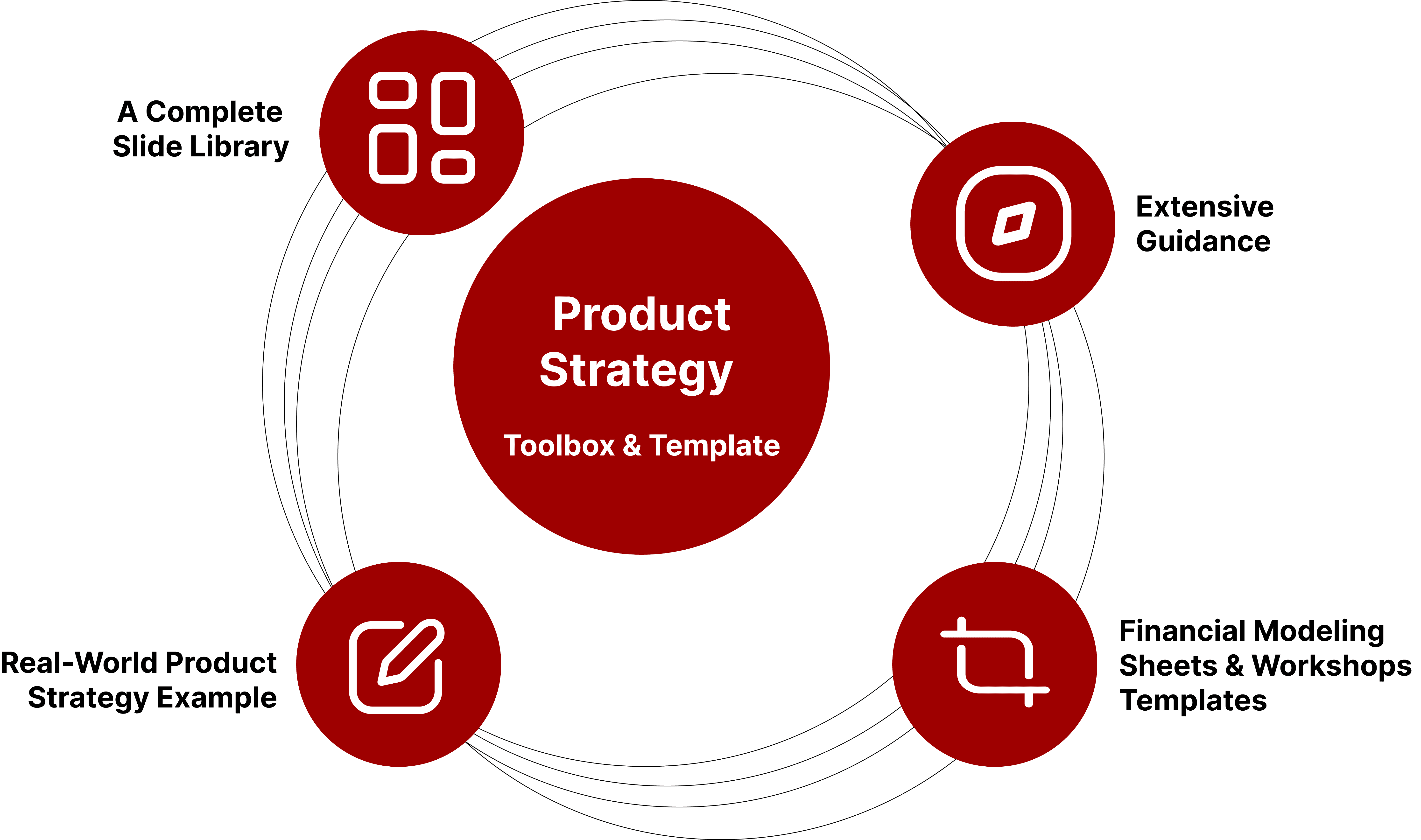
What Will You Get
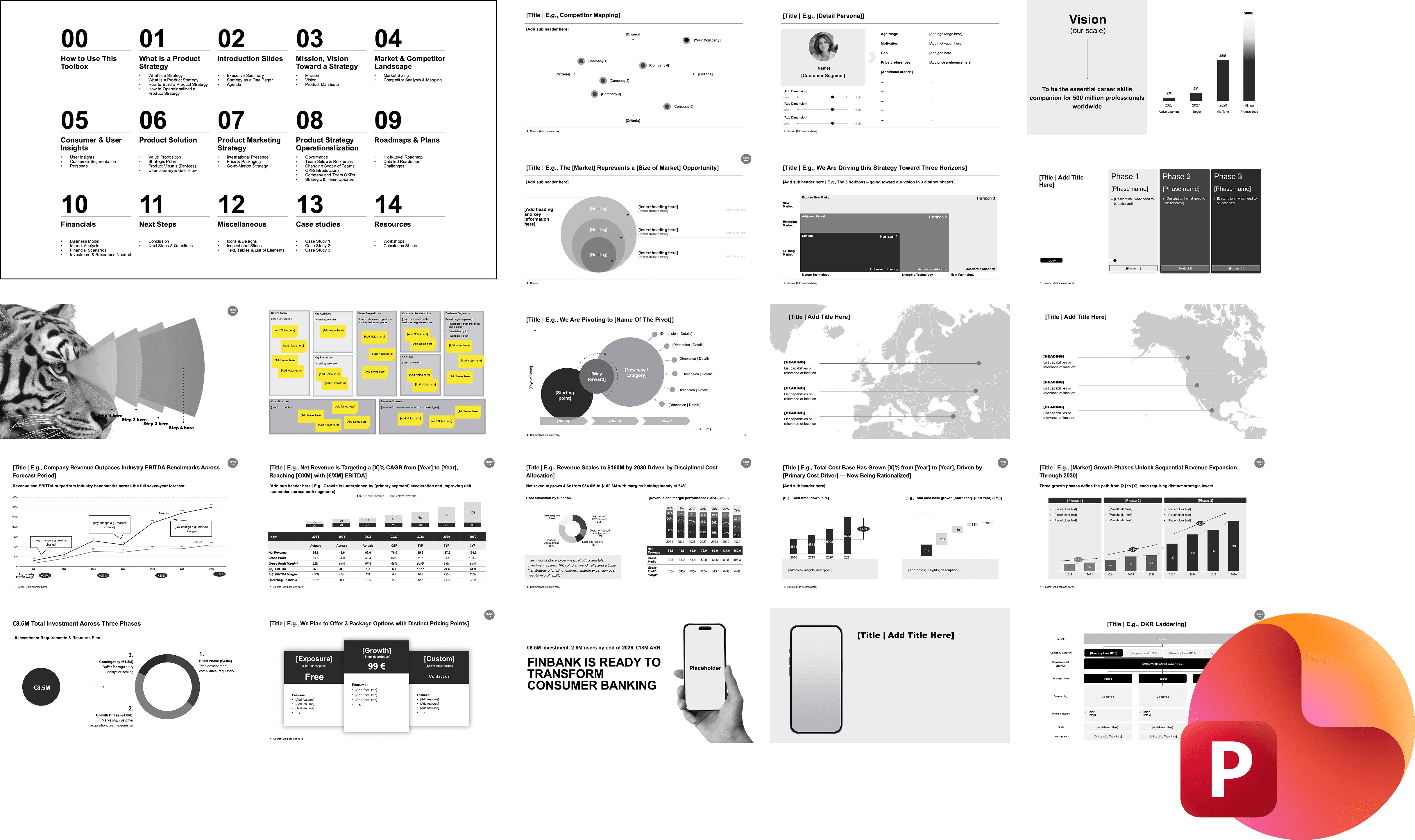
500+ Strategy Slides Ready to Use
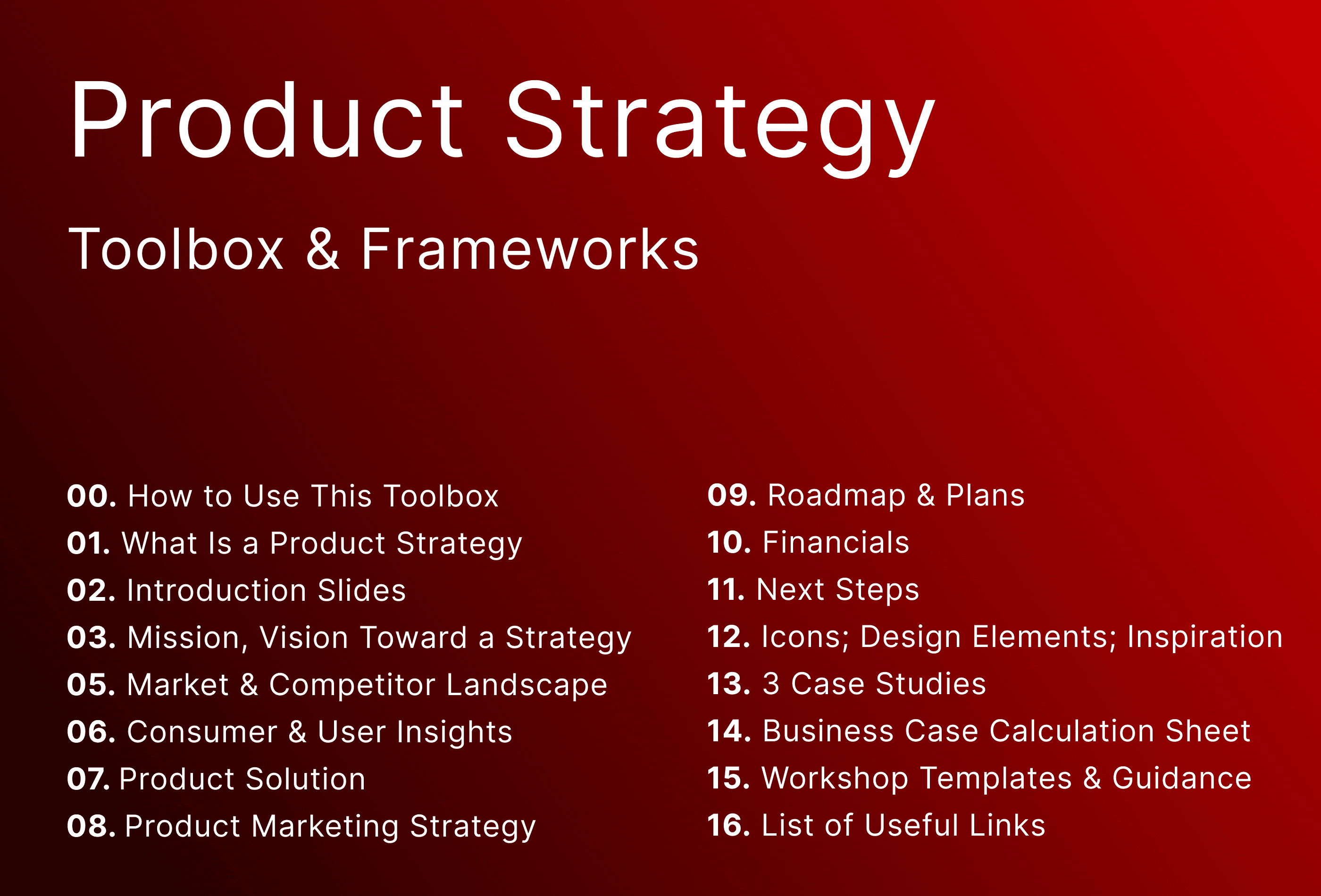
A slide library organized into 15 sections from executive summary and mission/vision through market analysis, product solution, go-to-market, operationalization, roadmaps, financials, and case studies. Every slide uses clean, professional formatting with placeholder text you swap for your own content. Pick the sections you need, drop in your data, and present. No design work required.

Calculation Sheets: Size Your Market & Build Your Case
Two plug-and-play spreadsheets to ground your strategy in numbers. The TAM/SAM/SOM calculator walks you through market sizing step by step. The business case template gives you a simplified but extendable financial model; Input your assumptions, get projections you can defend. Both are designed to feed directly into the slide templates.
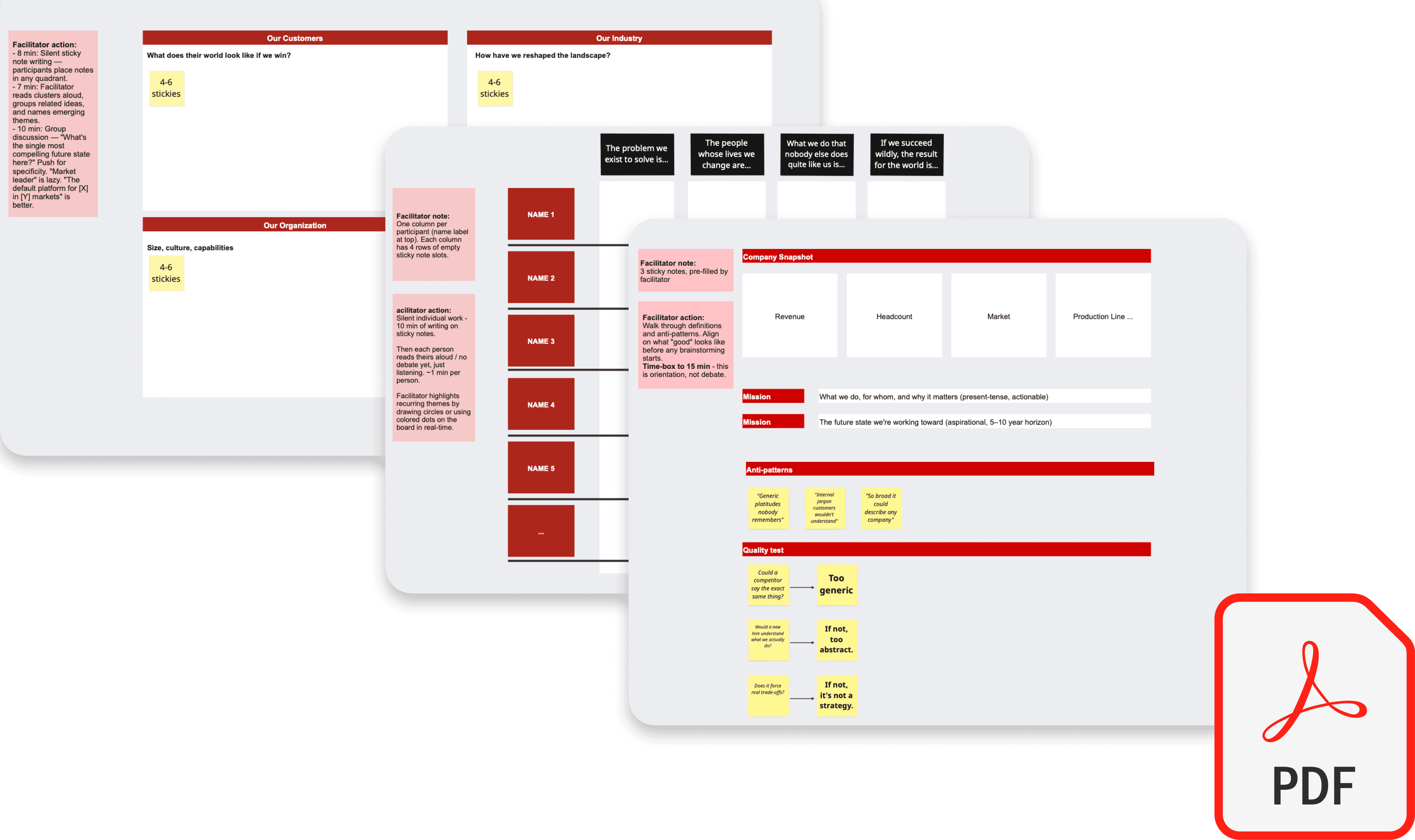
Workshop Templates: Align Your Team in One Session
3 facilitation-ready workshops with built-in guidance: define your product mission & vision, set company-level OKRs, and cascade into team OKRs. Each template includes structure, timing, and facilitation notes so you can run the session yourself (no external facilitator needed!). Designed for silent-first collaboration so every voice is heard.
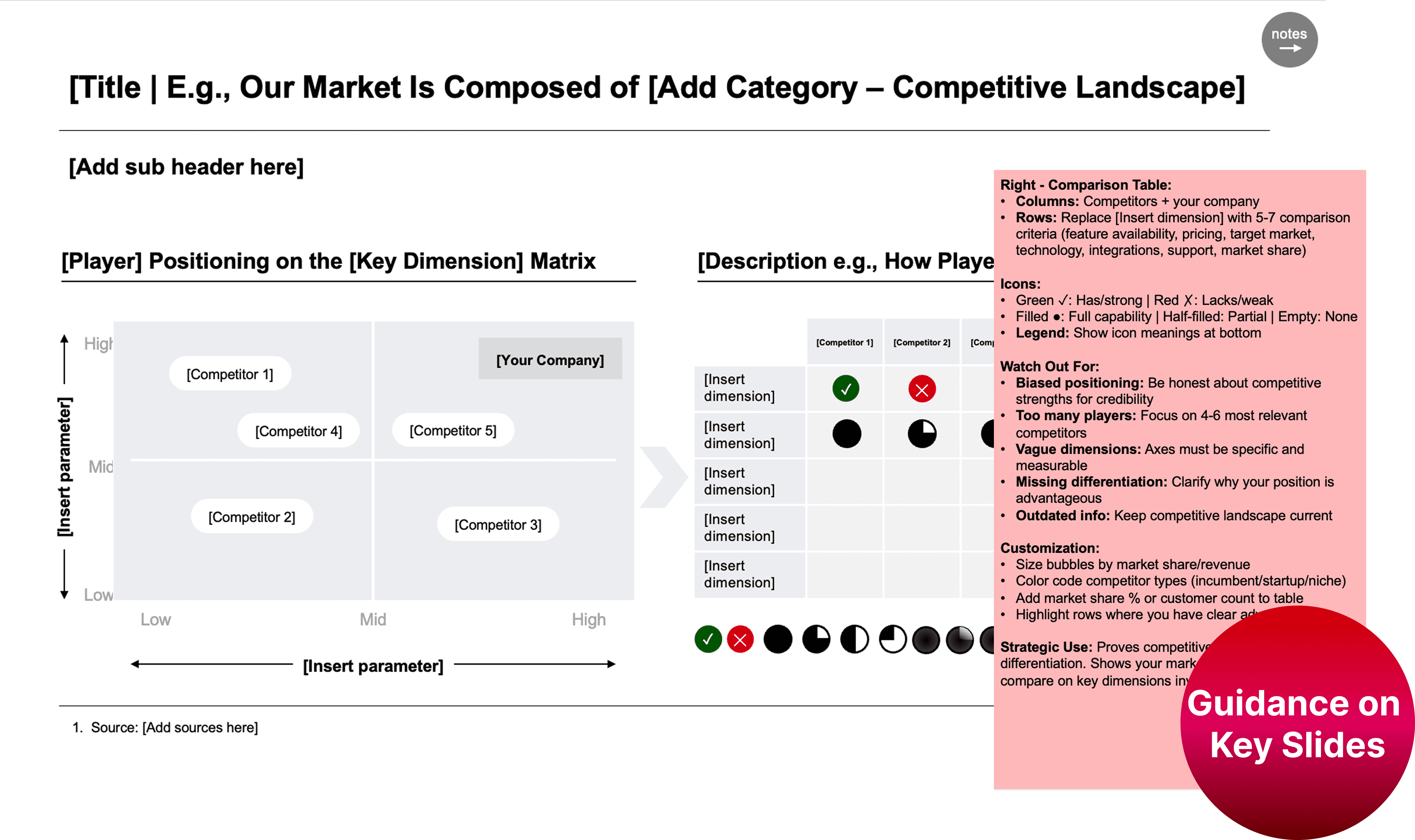
Built-In Guidance: Learn While You Build
This is not just a template; it is a system that teaches you as you use it. Guidance is embedded directly on key slides, and a dedicated "How To" section covers how to build a product strategy from scratch, how to write effective slides, and how to structure a compelling storyline. Whether you are a first-time product leader or a seasoned strategist, the guidance helps you move faster and communicate sharper.
When to Use This Toolkit
Whether you are a seasoned strategist or a first-time PM, this presentation template adapts to your needs:
Pitching a new product for funding or executive buy-in.
Sizing a new market and building a Go-To-Market entry plan.
Mapping out competitor landscapes and defining your response.
Running a prioritization workshop that ends in actual decisions.
Making the case for a product pivot with data-backed evidence.
The SlidesFolder Method

Testimonials
This is a great toolkit. It comes with well-designed PowerPoint templates, clear guidance, and a straightforward framework that's easy to follow.
JVL
Jessica V.L.
Head of Product
JV
Jonathan V.
Product Lead & Consultant
TM
Business Strategy (Martech)
Frequently Asked Questions
General
How often do you refresh your templates?
In which formats do you deliver the templates?
Can I use your templates in Google Slides?
What templates and toolboxes are available on SlidesFolder?
Customization & Branding
My company already has strict brand guidelines. Can your templates match them?
Can I change colors, fonts, and logos in the templates?
I need a template that I can’t find in your catalog. Can you create it?
Purchasing & Access
Can I buy several templates together and get a discount?
How do I receive my templates after purchase?
What should I do if I don’t receive the download email or the link doesn’t work?
Product Differences & Value
What makes your templates different from standard PowerPoint templates online?
Do your templates include guidance on how to use them?
Support and Other Questions
Can I get help editing or adapting a template?
What if I have a question that isn’t covered here?
What is a product strategy?
A product strategy is the set of choices that explains who you are building for, what problem genuinely matters, and how your product can win and endure over time. It is not a feature list, a roadmap, or a pitch deck. It is the logic connecting your market, your customers, your product bets, and your business outcomes, giving teams direction and giving leadership a way to make trade-offs without relitigating every decision. The Product Strategy Toolbox provides the frameworks, examples, and calculators to build that logic from scratch. For a deeper walkthrough, read the guide on what a product strategy is.
What is the difference between a strategy and a product strategy?
A strategy, in the broad sense, is any coherent set of choices about how an organisation will compete and allocate resources. A product strategy applies that thinking at the level of a specific product or portfolio: who it serves, how it wins, what gets prioritised, what gets stopped, and how progress is measured. Put simply, business strategy sets the corporate-level direction, while product strategy translates that direction into the bets and sequence that make a particular product succeed. The two should reinforce each other rather than sit in isolation.
What makes a good product strategy?
A good product strategy creates a clear value proposition that is differentiated enough to earn adoption and durable enough to support a business. In plain language, it should answer why this product, for these users, in this market, right now; what advantage you believe you can build; and what sequence of bets gets you there sustainably. Strong strategies share the same building blocks: vision and positioning, target segments, market context, strategic goals, principles and trade-offs, a roadmap direction, metrics, and a review cadence. The toolbox structures all of these into 500+ editable slides so the thinking is rigorous and presentation-ready.
What is inside the Product Strategy Toolbox?
The toolbox includes 500+ slides organised into 15 sections, from executive summary and mission/vision through market analysis, product solution, go-to-market, operationalisation, roadmaps, financials, and case studies. It also comes with two calculation sheets (a TAM/SAM/SOM market-sizing calculator and a business case model), three facilitation-ready workshop templates, and embedded "How To" guidance on building a strategy, writing effective slides, and structuring a compelling storyline.
Who is the Product Strategy Toolbox for?
It is built for product leaders, founders, and strategists who need to present a strategy to leadership, pitch a new product for funding, size a market, map competitors, make the case for a pivot, or align cross-functional teams. The embedded guidance supports both first-time product leaders and seasoned strategists.
